
DeGraff Court Docket Searches
DeGraff court records have to be confirmed, not guessed at. The village's own ordinances mention a Mayor's Court. Yet nothing official says it still sits today. The village offers no searchable DeGraff docket portal. Start with the citation or notice itself. Then call the village at 937-585-6632 and ask three things: whether a Mayor's Court is convening, who keeps the court record, and whether your matter was transferred somewhere else.
- Read the DeGraff citation, case paper, or notice for its court name, number, and issue date.
- Call DeGraff at 937-585-6632 to confirm the present custodian and court status.
- Ask whether a DeGraff Mayor's Court is currently sitting and whether the cited matter remains there.
- If the DeGraff matter was transferred, request the receiving court and new case number.
- Use a county or municipal portal only after the DeGraff document or village names that court.
DeGraff Court Ordinance Evidence
DeGraff sits fourth in the 2022 state estimate table. Its estimated population is 1,249. Its official ordinance library names a part-time Mayor's Court clerk. A 2023 ordinance spells out how a Mayor's Court is established. Those references matter. They prove a court once existed on paper. They say nothing about today's schedule or any online docket. They say nothing about the current clerk or how records are kept now.
That gap is the heart of a DeGraff records search. An ordinance gives you a question to ask, not an answer. It cannot tell you whether a DeGraff case is still active. It cannot tell you which office holds the file. One phone call beats an outdated citation every time. For the official text behind these references, the DeGraff ordinances and resolutions page is the source to read.
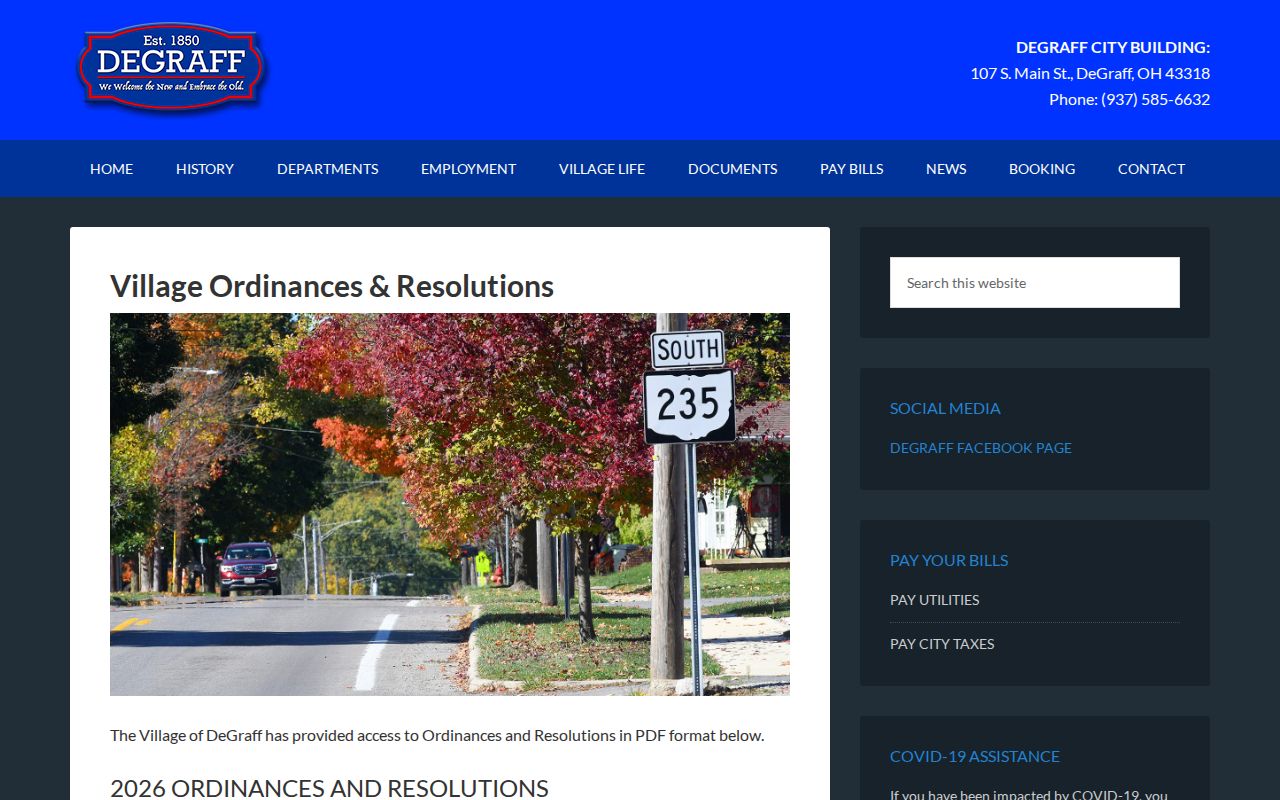
The ordinance page is a solid starting lead. For a working records route, you still need a current answer from the village itself.
Inside the DeGraff Municipal Court
No standalone DeGraff Municipal Court operates under that name. What DeGraff actually has, on paper, is a Mayor's Court reference. It does not have a published municipal docket system. A heading on a website cannot invent a court. If you hold a DeGraff citation, call the village. Ask which tribunal, clerk, or receiving court holds the record right now.
Watch the address, too. DeGraff's own village-government pages give conflicting addresses, so no postal address is listed here. Call 937-585-6632 before you drive over or mail anything. Confirm the office location plus the right records contact. That one call keeps your DeGraff request from landing at a stale address. The DeGraff village government page is the official contact source.
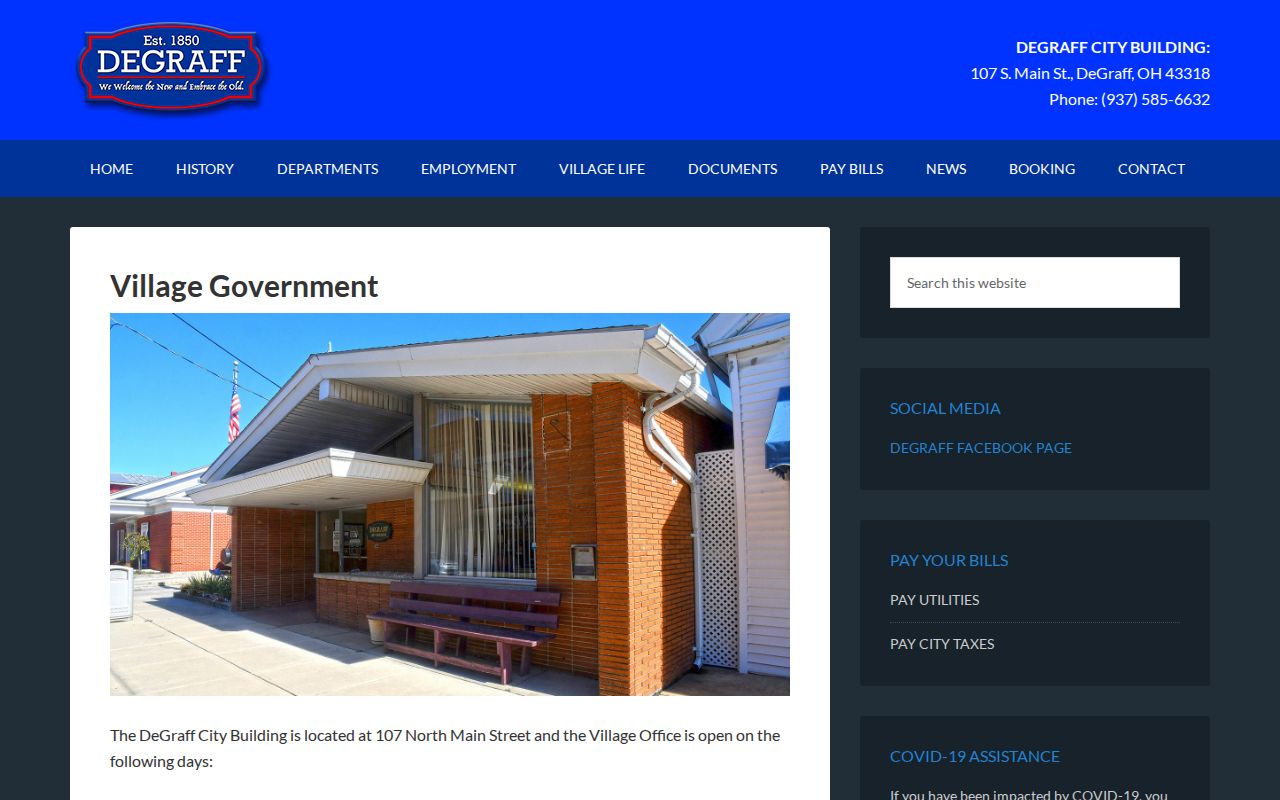
The village-government page supports a call-first approach. Verify the current office and the court-record keeper rather than trusting conflicting address text.
DeGraff Court Operations Gap
One fact about DeGraff is settled and one is not. The ordinances confirm a Mayor's Court existed in an organizational sense. What remains open is nearly everything operational. Does the court still sit, and when does it convene? Who is the clerk, and do any public date or payment records exist? Or do citations get routed elsewhere? A careful DeGraff search names each gap plainly instead of quietly filling it with a neighboring court.
That honesty matters most when your notice is old. An ordinance can stay online long after the schedule, the clerk, or the system changes. So ask for the exact present status, the schedule, the public access process, and any transfer destination. Write down the office name and the date you got the answer. That way you can follow up if needed.
Finding DeGraff Court Dates
No public DeGraff Mayor's Court calendar exists. A hearing date has to come from your own notice, your citation, or the village itself. A general village event calendar is not a court setting. An ordinance date or an old web page is not one either. When an appearance is close, confirm the date by phone. Ask where the matter went if it was moved.
| Date | Use the date on the DeGraff notice or citation, then confirm it with the village or named court. |
|---|---|
| Time | No current DeGraff court schedule was confirmed; rely on the individual notice and direct confirmation. |
| Location | Confirm the current DeGraff location by phone because official address text is inconsistent. |
| Judge | No current DeGraff presiding official was verified in the research. |
| Setting type | Use the description on the DeGraff notice and ask the custodian if the event is unclear. |
DeGraff Court Transfer Checks
Every DeGraff record question should include a transfer check. Ask whether the case stayed in a local Mayor's Court channel. Ask whether it moved to another court. If it moved, get the receiving court's full name, the case number, the transfer date, and the office that keeps the open docket. Those details beat a broad name search, because they tie your DeGraff matter to one specific keeper of the file.
Resist the shortcut of running a Bellefontaine municipal lookup just because Bellefontaine has a working online interface. That route is proper only if your citation or the village confirms Bellefontaine Municipal Court as the receiving court. Nothing makes that true for every DeGraff matter.
DeGraff Traffic Ticket Lookups
Hold onto a DeGraff traffic ticket and read it closely. It can name a local court, a receiving court, an appearance date, or a deadline. The village posts no public docket portal. That alone proves nothing about whether the ticket has a record. Call DeGraff first. Ask which office keeps the current court record. Get the court's name before searching online. If the case was transferred, use the destination court's own channel.
Ohio moves certain traffic abstracts from courts to the BMV under state law. R.C. 4510.03 is the official statute on that process. It is not a DeGraff docket search tool. It will not tell you where a particular DeGraff ticket sits. The citation and village confirmation still do that work. Treat the statute as background, not as a substitute for either one.
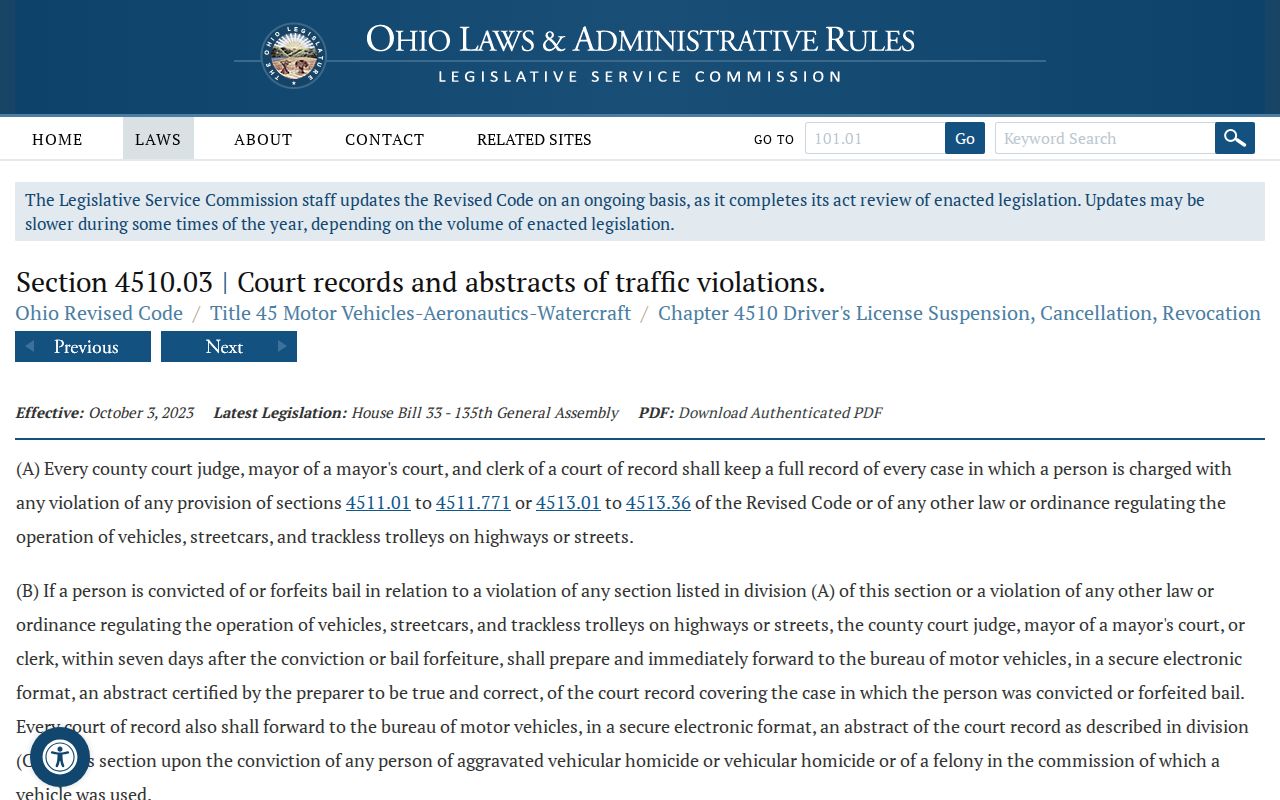
The statute explains how a court record moves through a state process. The citation and the current custodian still identify the actual local case path. Once the court is named, the county-wide picture is easier: see Logan County Traffic Court for that split.
DeGraff Court Record Boundaries
Village paperwork is not the same thing as a court docket. A DeGraff mayor's office or police department may hold administrative records. A court keeps the docket, case entries, hearing dates, and case documents. Say which type you want when you call DeGraff. That one sentence lets the office tell a village request apart from a court-custodian question.
Narrow the request itself. Skip the broad demand for every record tied to a name. Offer the citation or case number, a date range. Add the named court if you know it. Then name the specific public item you seek. Next, ask about inspection, a redacted copy, certification, or a transfer record as needed. This respects privacy rules and DeGraff's still-unsettled access path at the same time.
How DeGraff Cases Reach the County
DeGraff cases start in the village. They do not land in a Logan County court automatically. A DeGraff Mayor's Court is a plausible lead. Its present operation still needs confirmation. County work goes elsewhere. The Logan County Common Pleas General Division handles general civil and criminal matters within its jurisdiction. Domestic Relations, Juvenile, and Probate cases run through Logan County Family Court channels. The citation, a transfer record, or the custodian tells you which route applies.
Docket flow: DeGraff citation or village confirmation › current local custodian or confirmed transfer › named county court division or clerk.
Once a DeGraff matter is confirmed as county-filed, the Logan County Records Search offers a public case lookup by case number or defendant name. It is not proof of full coverage, and a clerk's access decision still governs. A General Division calendar PDF works the same way: it shows a current schedule snapshot, not a complete case file.
Who Can See DeGraff Court Records
Access to DeGraff court records turns on which office holds the record today. Ohio Sup.R. 44 defines court records and case documents. Sup.R. 45 sets the court-access framework, covering personal-identifier omissions and defined restrictions. R.C. 149.43 governs public records for government agencies generally. A court record also answers to the Rules of Superintendence and any court orders in force.
DeGraff offers no authoritative portal, so a portal search cannot settle access. A missing record could mean a routing issue. It could be thin online coverage, a restriction, sealing, expungement, or simply no match. Ask the confirmed custodian for the accessible docket, index, or redacted record. If something is withheld, request the stated basis for that decision.
Key Rules:
Sup.R. 44 defines Ohio court records and case documents.
Sup.R. 45 addresses public access, redaction, and restrictions.
R.C. 149.43 is Ohio's public-records statute, subject to court-specific rules and orders.
DeGraff Record Requests
Start a DeGraff record request by calling the village at 937-585-6632. Confirm the current address, office, and custodian before anything else. State plainly what you want. It may be a local administrative record, a court date, a public docket, a disposition, or a transferred case. If the matter moved, ask for the receiving court and its case number in writing. That keeps the request tied to a record path you can verify.
The Clerk of Courts Legal Department lists 937-599-7275. For a confirmed Logan County court file, it sits at 101 South Main Street, Room 218, Bellefontaine. No current court-wide certified-copy price is published. Before paying anything, ask the exact custodian about inspection, copies, certification, mailing, and restrictions.
DeGraff Current Court Status
Keep DeGraff's historic materials separate from its current operations. Ordinance references can support a DeGraff Mayor's Court as a lead. They cannot confirm a session this week. They cannot identify the current clerk by name or show that an online portal holds present records. The split matters because municipal practices change faster than older documents get updated.
For a live question, call the village. Give the citation or date and ask for the current court status and custodian. If the answer points to another court, write down that court's exact name. Get the case number too. At that point a DeGraff record can be routed to the right external court channel. The facts will hold up.
DeGraff Court Routing Notes
Write things down as you go. A DeGraff traffic ticket or court notice carries the details that decide your path. Note the court named, the case or citation number, the issue date, the agency, and where you are told to appear. Start there. Then call the village and ask one plain question about your case. Is this DeGraff matter still in a local court channel? Does it have a public date or docket? Or was it moved? If it was transferred, get the receiving court and the new case number. Try any online docket search only after that.
This kind of note also keeps two different records from getting confused. An old ordinance book can show that a Mayor's Court once existed in DeGraff. It says nothing about a case's status today. The village office may hold an administrative file, yet the court or its clerk keeps the actual docket. A short, specific request lets the clerk find the right record without guessing.
For a Logan County matter, wait until you know the division before turning to the county clerk or eServices. The county record search works with verified case numbers and defendant names. It does not promise full DeGraff coverage. When a query comes up empty, ask the confirmed office rather than switching to a different court system.
Keep the answer with the ticket or notice itself. A clerk can use a confirmed court name and case number to pull the right file fast. A guess can land your request with the wrong office. That office may hold no DeGraff court record at all.